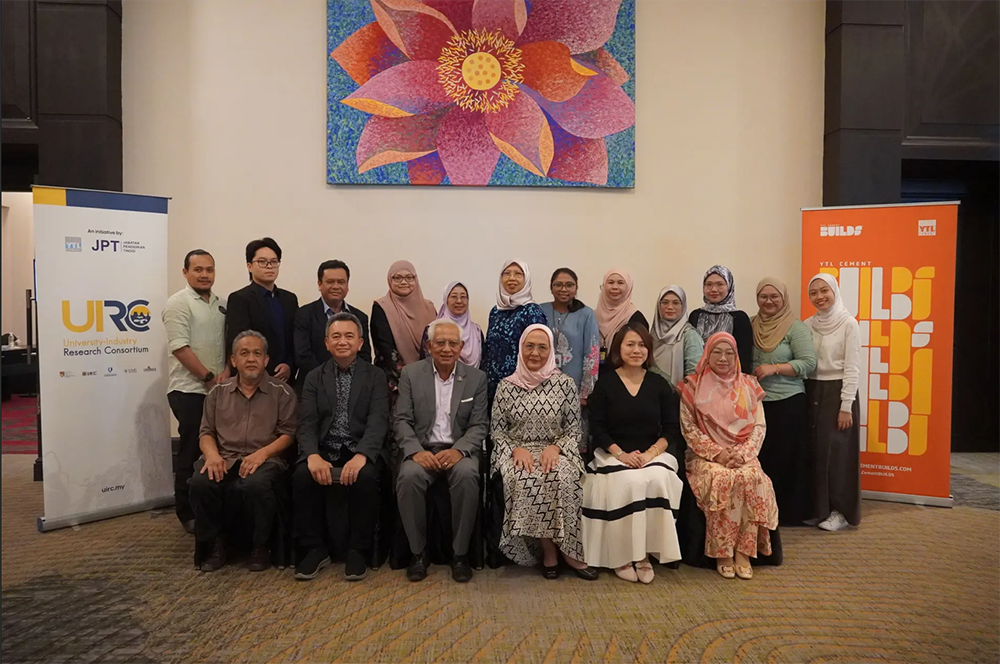
The University-Industry Research Consortium (“UIRC”), jointly established by YTL Cement and the Ministry of Higher Education in 2023, remains a cornerstone of the company’s biodiversity management approach. As Malaysia’s first university-industry consortium dedicated to tropical limestone karst landscapes, UIRC brings together academia, industry, and policymakers to advance research that supports sustainable resource management and biodiversity conservation.
During the year, UIRC expanded its multidisciplinary network of researchers, bringing together experts in biodiversity, geoheritage, archeology, geopark and sustainable resource management to undertake a comprehensive study of the Kinta Valley limestone karst ecosystem. The research project, “Kelestarian Batu Kapur Lembah Kinta: Analisis Sumber dan Nilai Warisan untuk Menentukan Zon Penggunaan Lestari dan Pemuliharaan Warisan”, seeks to develop a deeper understanding of the resource, ecological and heritage values of the limestone karst landscape particularly in the Kinta Valley.
Aligned with UIRC’s mission, the research aims to identify an appropriate balance between development and conservation through science-based assessment and evidence-based recommendations. The findings will contribute to a more comprehensive understanding of tropical limestone karst ecosystems and support informed decision-making for sustainable resource management in the state of Perak.
During the reporting year, Phase 1 of the study was successfully completed. Key outcomes included the assessment of limestone resource quality and heritage values within the Kinta Valley, a review of existing policies, guidelines, and management approaches, and recommendations to strengthen governance and management frameworks for limestone karst landscapes. These findings provide valuable insights that support both biodiversity conservation and the responsible development of mineral resources, whilst complementing the objectives of the National Mineral Policy.
Building on these achievements, Phase 2 of the project will focus on field verification, targeted geological, biodiversity, and cultural assessments, as well as the use of drone-based photography and mapping technologies to further refine conservation and sustainable development zones. The additional data generated will strengthen the scientific foundation needed to support long-term management of tropical limestone karst ecosystems and guide future conservation efforts.
In parallel, the UIRC Young Researcher Industrial Grant continues to support early-career academics in producing actionable research that contributes to biodiversity conservation, sustainable site planning, and responsible resource management. Through this initiative, YTL Cement is not only advancing scientific knowledge but also nurturing the next generation of researchers committed to sustainable development.
In parallel, the UIRC Young Researcher Industrial Grant continues to support early career academics in producing actionable research that contributes to biodiversity conservation, sustainable site planning, and responsible resource management. Through this initiative, YTL Cement is not only advancing scientific knowledge but also nurturing the next generation of researchers committed to sustainable development. Further details on this can be found in the Community chapter in the report.